

What a song gives a baby
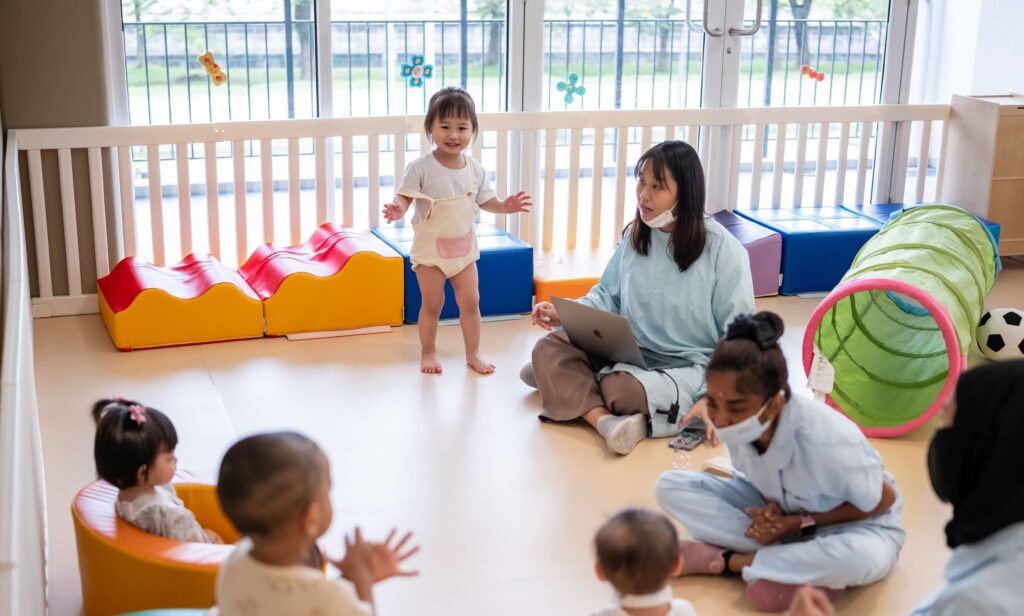
A song is far more than a pleasant sound to a young child. The rise and fall of a melody helps a baby notice the patterns inside speech — where a phrase begins, where it ends, which sounds repeat. Rhymes and repeated verses give little ears something predictable to hold on to, and that predictability is deeply reassuring for a baby who is still making sense of a big, busy world. Singing is also one of the warmest forms of attention a baby can receive. When an Infant Teacher sings to a baby, she is face to face, unhurried, and entirely present. The baby watches her mouth move, hears the words stretch and bounce, and — long before joining in — begins to answer with coos, babbles and delighted kicks. Every one of those little responses is early conversation, and every one deserves to be celebrated.Sensory play: learning with every sense
Music is one thread of something bigger. Babies learn through their senses — touching, tasting, listening, looking, moving — which is why our art and sensory sessions matter just as much as our songs. A crinkle of paper, a smear of paint, the surprise of something cool or soft under small fingers: each new texture and sound is a small discovery, and each discovery teaches a baby that exploring is safe and wonderful. What looks like simple play is a baby doing serious work. Reaching, grasping, shaking and banging build the small muscles of the hands; following a sound with the eyes links hearing to looking; repeating an action to make the same sound happen again is a baby’s very first experiment. Our role is to prepare inviting things to explore, then give each child the time and encouragement to explore them in their own way.How music grows with your child
Because we care for children from birth to three, music looks different at every stage — and it should. In Tiny Beginnings, songs are soft and close: lullabies, gentle rhymes, a steady voice that soothes and reassures. For our Explorer’s Edges children, music becomes something to answer — clapping, swaying, filling in the last word of a favourite verse. And by Junior Sprinters, it is something to lead: choosing the song, doing the actions, singing out loud with growing confidence. The same song can serve a child differently month by month, which is one of the loveliest things about it. A rhyme that once soothed a newborn becomes a game for a sitting baby, then a chant for a toddler on the move. Nothing is wasted, and nothing is rushed.The confidence hiding inside a nursery rhyme
There is a quiet kind of confidence that grows when a child knows what comes next. A toddler who knows the actions to a song joins in without being asked; a baby who recognises a tune reaches out before it begins. Music gives even the youngest child a way to take part — to be a doer, not just a watcher — and taking part, again and again, in a place where every attempt is met with warmth, is how confidence is built. Singing together also makes a room feel like it belongs to everyone in it. A shared song marks the shape of the day, welcomes a child into the group, and turns a roomful of individual babies into little companions. For a child settling into time away from home, that feeling of belonging matters enormously.Bringing song home
None of this needs training, a good singing voice, or special equipment — babies are gloriously uncritical audiences, and yours already prefers your voice to any recording. The songs your family sings, in whichever language you speak at home, are every bit as valuable as anything we sing at the centre.Try this tomorrow
Pick one song and make it yours — the same one at the same moment each day, perhaps at bath time or in the car. After a week or two, pause before the last word and wait. The look on your baby’s face as they realise they know what comes next is a small milestone worth catching.