


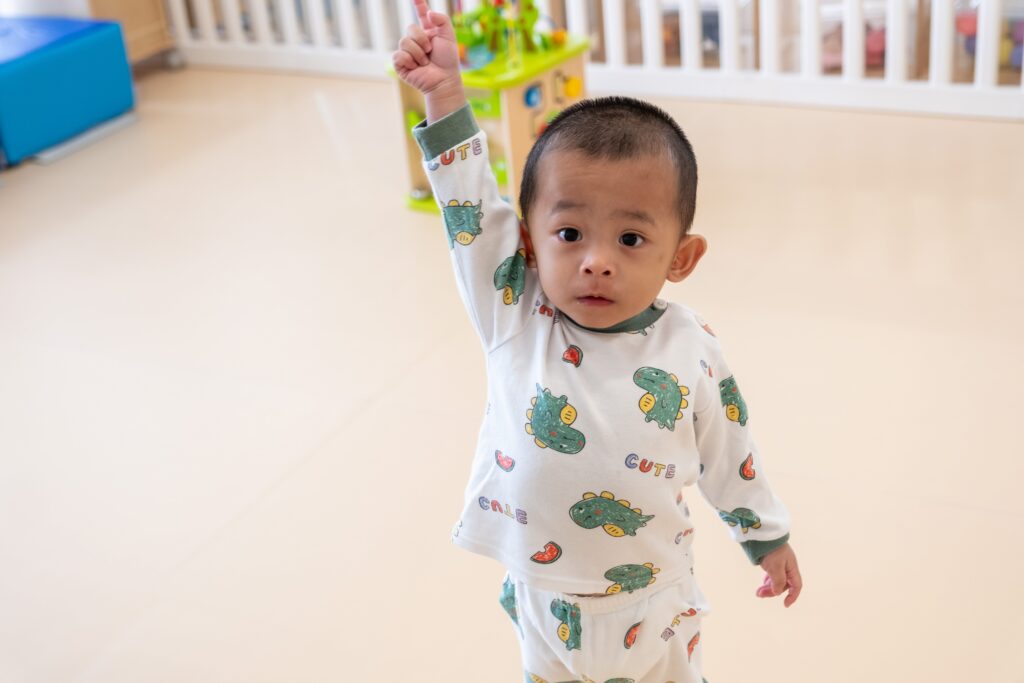
Understanding runs well ahead of speaking
This is the single most useful thing to know. A child of this age generally understands far more than they can say, and the gap between the two is where a lot of frustration lives. They know exactly what they want. They simply have not got the word for it yet. Which means the tears are not usually about the biscuit. They are about not being able to say biscuit.The pointing is the conversation
When your child points at something and looks back at your face, that is not a request — or not only a request. It is an invitation. They have noticed something and they want you to notice it too, and checking your face is them making sure you did. Answer it as you would answer a sentence. Yes, a bird. It is sitting on the wire. You have just handed them four or five words attached to something they were already interested in, which is the only way words ever really stick.One word is often a whole sentence
‘Up’ can mean carry me, or look up there, or the lift is moving. ‘Dada’ can mean where is he, that is his shoe, or I want him and not you. The word is doing the work of a sentence, and the meaning sits in the moment rather than the vocabulary. The most useful thing you can do is say the fuller version back, without correcting them. They say up; you say you want to come up. No pressure to repeat it. They are listening far more than they are performing.And then there is ‘no’
‘No’ arrives early and gets a great deal of use, and it is genuinely worth celebrating even on the afternoons when it is not. It is one of the first times your child discovers that a word can change what happens next — that they can affect the world by speaking rather than crying. That is an enormous realisation, and they will practise it thoroughly. Offering two acceptable choices takes most of the heat out of it. The blue cup or the green cup? The answer matters much less to them than being the one who chose.Try this tomorrow
Leave a gap. Ask something, then count silently to five before filling the silence yourself. A child of this age often needs those five seconds to find the word, and we tend to take them back too soon.
Every child on their own timeline
Children arrive at all of this at genuinely different times, and a child growing up with two or three languages around them — which describes a great many children in Penang — may take their own route through it. That is not a delay. It is a bigger job being done well. All the same, you know your child better than anyone. If something is worrying you — not much response to their name, little pointing or gesture, or words that have gone quiet after arriving — that is worth raising early with your doctor, and worth telling us too. Nobody minds being asked. Early conversations are easy ones.What helps, in short
- Narrate what you are doing, even when it feels one-sided.
- Say the fuller sentence back rather than correcting the shorter one.
- Follow what they are looking at instead of redirecting them.
- Read the same book again. And again. The repetition is the point.
- Leave gaps in the conversation for them to step into.