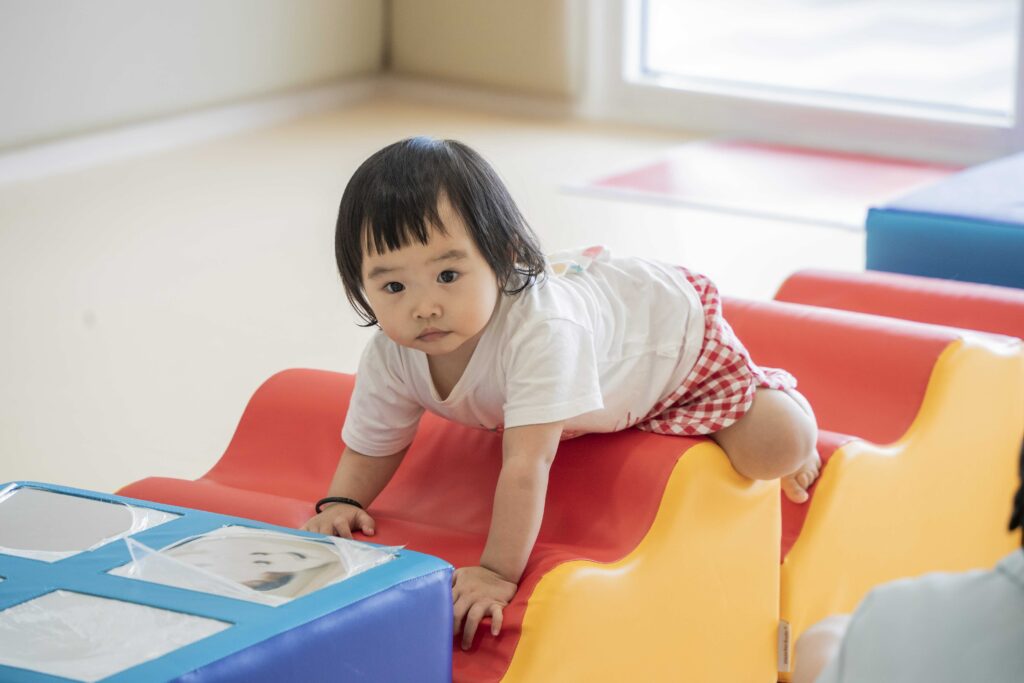
If you have ever watched another baby sit steadily while yours was still happily rolling, and felt a small flutter of worry — this note is for you. Babies do not follow timetables. They follow their own quiet, determined curiosity, and almost everything a parent wonders about in the first year sits comfortably inside the wide range of normal.
Milestones are ranges, not deadlines
The first year is often described as a checklist, but a range is the truer picture. One healthy baby sits months before another; both may take their first steps within weeks of each other. What matters far more than any date is the direction of travel — a baby who keeps gaining new skills, in their own order and at their own pace, is doing beautifully.
So as you read on, hold the ranges lightly. They describe what many babies do, not what every baby must do — and your baby has never been “most babies”.
The early months: strength before movement
The earliest milestones are easy to miss because they look so small. A baby lifting and turning their head during tummy time, pushing up on their forearms, reaching for a toy and bringing it proudly to their mouth — each of these is quietly building the neck, shoulder and core strength that every later milestone borrows from.
Rolling tends to arrive around the middle of the first year, often one way first — and often to the baby’s own surprise. That startled, delighted face the first time the world flips over is one of the joys of this age.
Try this tomorrow
During tummy time, place a favourite toy just slightly out of reach and let your baby work towards it. The stretching, wriggling and reaching is the exercise — the toy is simply the reason.
Sitting: a new view of the world
Sitting usually comes gradually — first propped against you, then leaning forward on both hands in a little tripod, then steadily and hands-free, for many babies somewhere in the middle to later part of the first year. The gift of sitting is not really the posture. It is the new view: two free hands, a level gaze, and a whole world of objects to examine, bang together and pass from hand to hand.
Crawling — and why some babies skip it entirely
Crawling has no single look. Some babies commando-crawl on their tummies, some rock on all fours for weeks before setting off, some shuffle along on their bottoms at remarkable speed, and some roll everywhere they wish to go. A few skip crawling altogether and move straight to pulling up and cruising. Every one of these paths is normal. Babies are wonderfully practical: they choose whichever way of moving gets them to the interesting thing fastest.
Standing and those first brave steps
Towards the end of the first year, many babies begin pulling up on furniture, then cruising sideways along it, hands gripping the sofa like a tiny mountaineer. First independent steps often arrive around the first birthday — and plenty of confident, capable walkers take theirs comfortably later. Late walking, on its own, says nothing about how bright, strong or determined your child is. It usually says only that they are thorough.
How our Infant Teachers support each stage
At PikoPoko in Bayan Lepas, babies and toddlers aged 0–3 move through three stages that follow exactly this journey. In
Tiny Beginnings, our Infant Teachers — many from nursing and paediatric backgrounds — give babies unhurried floor time to roll, reach, sit and pull up, with a watchful eye and a steadying hand. In
Explorer’s Edges, new crawlers and cruisers are given safe, padded floor to practise, because confidence grows fastest where a tumble is soft.
Music and sensory play run through every day here, and not by accident. Songs with actions invite reaching and rocking; textured play invites leaning and grasping. A baby who is enchanted forgets they are exercising — which is, we find, the loveliest way to grow strong.
When to ask for advice
Ranges are reassuring, but they are not a substitute for someone who knows your baby. If something niggles at you — a skill that seems to have paused, a strong preference for one side, or simply a parent’s instinct that will not settle — mention it at your next check-up with your paediatrician or klinik kesihatan. Asking is not worrying; it is what attentive parents do, and reassurance is always worth having. You know your baby best.
Every step, in its own time
Crawling, sitting and standing will each arrive — in your baby’s own order, at your baby’s own pace, and every one worth celebrating. Our role, at home and at the centre, is simply to make the world safe enough, soft enough and interesting enough that they cannot resist setting off.
If you would like to talk about your baby’s stage, or see how our Infant Teachers support these first milestones, call or Whatsapp us on
+60 12-654 4313 to arrange a visit in advance — for the safety and hygiene of the babies in our care, visits are by arrangement rather than walk-in.