

Watch the baby, not the calendar
Every baby arrives at readiness in their own time. Rather than fixing on a date, our Infant Teachers look for the signs a baby gives when they are curious about food: sitting steadily with support, holding their head confidently, watching a spoon travel with real interest, and reaching for what the grown-ups are eating. These signs usually appear around the middle of the first year, but the range is wide and normal. Your paediatrician or klinik kesihatan is the right person to confirm when your own baby is ready, and to advise on any foods to hold back in the first year.Begin gently: one taste, no hurry
The first foods are not really about nutrition — milk still does that work. They are about letting a baby explore a brand-new experience with all the safety and reassurance in the world. A single smooth taste, offered when the baby is rested and mildly hungry rather than ravenous, gives them room to be curious instead of frustrated. If the mouth opens for more, wonderful. If the face crumples, that is not failure — it is a baby meeting something new, and tomorrow is another chance.Textures are a journey, not a test
What we notice at the centre is that confidence with food grows in small, steady steps: smooth, then mashed, then soft lumps, then pieces a little hand can hold. Each stage teaches the tongue, jaw and fingers something the next stage will need. There is no prize for rushing ahead, and no harm in lingering where a baby is happy — the progression matters more than the pace.The mess is not a problem — it is the point
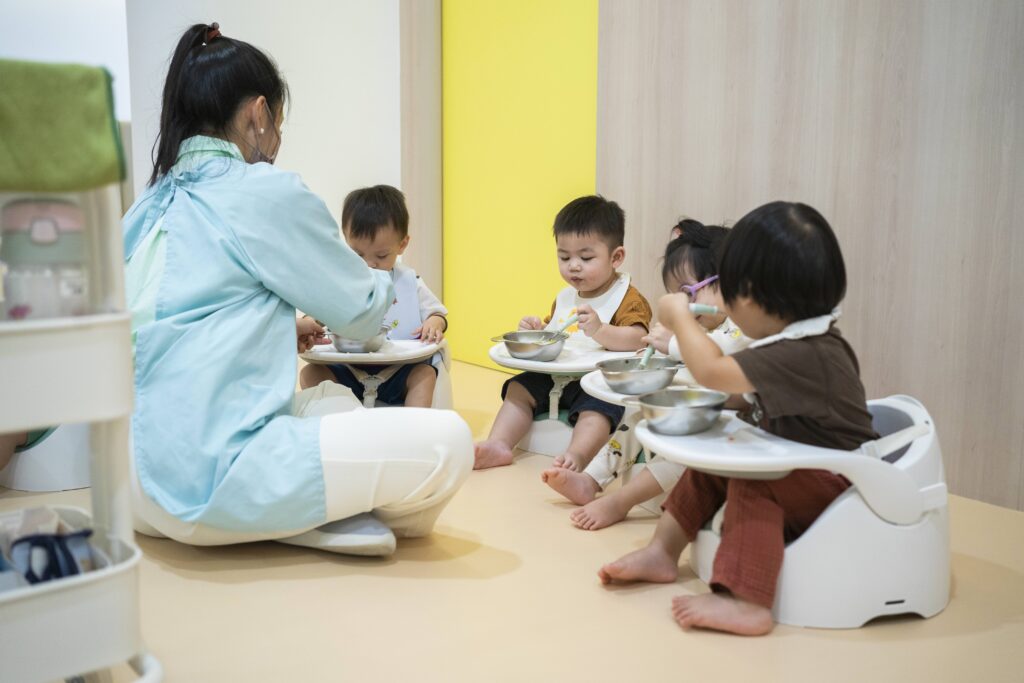
Squeezed banana, porridge in the hair, a spoon flung joyfully to the floor: to an adult it looks like chaos, but to a baby it is research. Touching, smearing and squashing food is how little ones learn what it is before they trust it in their mouths. It is the same instinct we nurture in our art and sensory sessions — hands-first curiosity — and the babies who are allowed to be messy eaters are so often the ones who become bold ones.Where this fits in a PikoPoko day
Food exploration sits right at the heart of our Tiny Beginnings stage, where babies are exploring new foods at the same time as they learn to crawl, sit and stand — two kinds of adventure feeding the same growing confidence. By the time a child moves into Explorer’s Edges, that early curiosity is becoming independence: practising with finger foods, reaching for the cup, wanting to do it myself. Our Infant Teachers, many from nursing and paediatric backgrounds, treat mealtimes as unhurried, individual moments — because a baby who feels safe at the table is a baby who is free to explore it.When a food is refused — and refused again
Almost every parent meets the clamped mouth and the turned head. Take heart: refusing a new food is one of the most ordinary things a healthy baby does, and it rarely means never. What we see work is quiet persistence without pressure — the same food returning calmly another day, offered alongside something familiar, with no coaxing and no bargaining. A baby may need to meet a food many times before deciding it is a friend. The kindest thing we can do is keep the table a happy place while they decide.Try this tomorrow
At the next meal, put a tiny portion of one new food beside a favourite familiar one — and let your baby lead. No aeroplane spoons, no “just one bite”. If it is only touched and squashed today, that still counts as progress.